Quick answer
In NYC, a 'water bug' is almost always a large American or Oriental cockroach that comes up from drains, basements and shared plumbing — they're true cockroaches, just bigger than the small German cockroaches that infest kitchens. The difference matters because water bugs are treated at drains and plumbing entry points, while German cockroaches are treated with gel bait at their indoor harbourages.
The quick answer
In NYC, a “water bug” is a large American or Oriental cockroach. It’s a true cockroach — New Yorkers just use “water bug” for the big ones that come up from drains and basements, to distinguish them from the small German cockroaches that infest kitchens. Knowing which you have matters, because they’re treated differently.
What is a water bug, really?
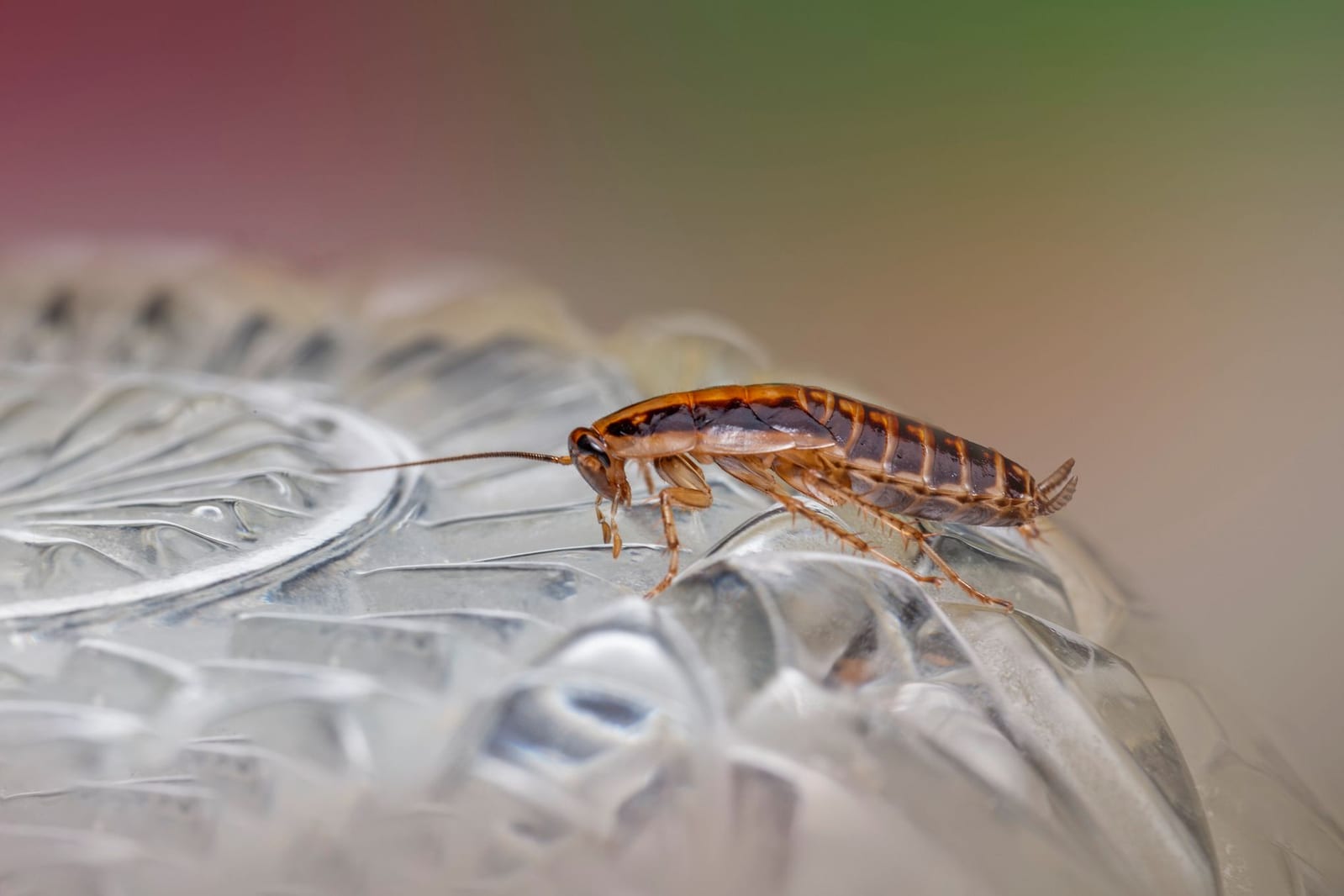
The name “water bug” technically belongs to a different insect altogether: the giant water bug, an aquatic predator found in ponds and slow streams. It’s a true water bug, not a cockroach, and it essentially never shows up inside an NYC apartment. What New Yorkers actually mean by “water bug” — the large roach that appears near a drain, in a basement, or scuttling across a bathroom floor at night — is a American cockroach or Oriental cockroach. Both are large, both are true cockroaches, and both are common in older buildings with ageing plumbing.
Are water bugs and cockroaches the same species?
Yes, for practical purposes. “Water bug” isn’t a scientific classification — it’s a colloquial label New Yorkers apply to the two big cockroach species that turn up near moisture and drains, as opposed to the small German cockroach that breeds indoors year-round. If you’ve been told you have “water bugs,” pest control professionals will almost always be treating an American or Oriental cockroach problem.
Identification: water bug vs. German cockroach
| ”Water bug” (American/Oriental roach) | German cockroach | |
|---|---|---|
| Size | Large (1–2 inches) | Small (½ inch) |
| Colour | Reddish-brown (American) or dark brown/black (Oriental), shiny | Tan/light brown with two dark stripes behind the head |
| Where you see it | Bathrooms, drains, basements, at night | Kitchens, near appliances, cabinets |
| Comes from | Drains, plumbing, basements, sewers | Breeds indoors in warm, humid harbourages |
| Breeds indoors? | Less so — enters from outside/below | Yes — explosively, via egg cases that hatch in 10–30 days |
| How it’s treated | Drain + plumbing entry treatment, exclusion | Gel bait at harbourages, crack-and-crevice |
American and Oriental cockroaches are close enough in size and behaviour that both fall under “water bug” in everyday NYC usage; the practical difference between them is minor for treatment purposes, while the difference between either and a German cockroach is significant.
Why the distinction matters for treatment
If you have water bugs (American or Oriental cockroaches), spraying your kitchen counters won’t help — they’re coming up through drains and plumbing chases from a basement or sewer connection, so treatment targets those routes: drain treatment, sealing entry points, and reducing moisture at the source. See our full walkthrough in how to get rid of water bugs in NYC.
If you have German cockroaches, the population is breeding inside your apartment — inside cabinet hinges, appliance motor housings and wall voids. Professional gel bait placed directly at those harbourages collapses the colony from within; sprays just scatter it, pushing roaches deeper into voids and adjacent units.
Misidentifying which one you have is the single most common reason a DIY treatment fails: you end up sealing drains for a German cockroach problem, or spraying kitchen cabinets for a water bug problem, and neither touches the actual source.
How do I get rid of water bugs once I’ve identified them?
Once you’re confident it’s a water bug (American or Oriental cockroach) rather than a German cockroach, the approach is exclusion- and moisture-led rather than bait-led:
- Cover and treat drains — their primary route into the apartment.
- Seal gaps around pipes, under sinks and under doors — anywhere plumbing or cabling passes through a wall.
- Reduce moisture — fix leaks, ventilate bathrooms and basements, and don’t let water sit in floor drains.
- Treat harbourage points professionally — crack-and-crevice work at basements and plumbing chases, delivered through professional cockroach and water bug control, addresses the source population, not just what’s visible.
- Coordinate at the building level — in multi-unit buildings, an untreated basement or riser will keep reseeding every apartment above it, so report activity to your super or management.
Full step-by-step detail is in how to get rid of water bugs in NYC.
Why moisture is the common thread
Both American and Oriental cockroaches are drawn to damp, humid environments — it’s the defining trait that separates them from the German cockroach, which tolerates drier indoor conditions as long as food is available nearby. A basement with a slow leak, a floor drain that’s dried out and stopped trapping sewer gas, or a boiler room with poor ventilation are all classic water bug sources in older NYC buildings. Addressing that moisture is often as important as any chemical treatment — it removes the reason the population is there in the first place.
Why New Yorkers use “water bug” at all
Two things drive the name. First, it’s partly euphemism — “water bug” sounds less alarming than “cockroach” to say out loud to a landlord or a date. Second, it’s descriptively accurate: these roaches genuinely are associated with water — drains, damp basements, sewer connections — which is exactly where German cockroaches are not typically found. The label persisted because it maps to where you encounter the insect, even though entomologically it’s still a cockroach.
Can you have both at once?
Yes, and it’s common in NYC brownstones and older multi-unit buildings. A garden-level or basement unit can have American cockroaches coming up from sewer connections while an upper-floor kitchen in the same building has an unrelated German cockroach problem breeding in cabinets. The two populations don’t mix or migrate into each other’s territory in any meaningful way, but they can both be present in the same building at the same time — which is another reason accurate identification, room by room, matters more than a single building-wide diagnosis.
What to do about either
Either way, store-bought sprays tend to make German cockroach problems worse — by scattering the colony — and barely dent water bugs, since the source is outside the reach of a can of spray. Correct identification is the first real step in fixing the problem, not an afterthought.
See our professional cockroach and water bug control service for how each species is treated differently, or call for a prompt inspection if you’re seeing them regularly and aren’t sure which you have. If cost is your first question before booking, our cockroach exterminator cost guide breaks down typical pricing for both water bug and German cockroach treatment.