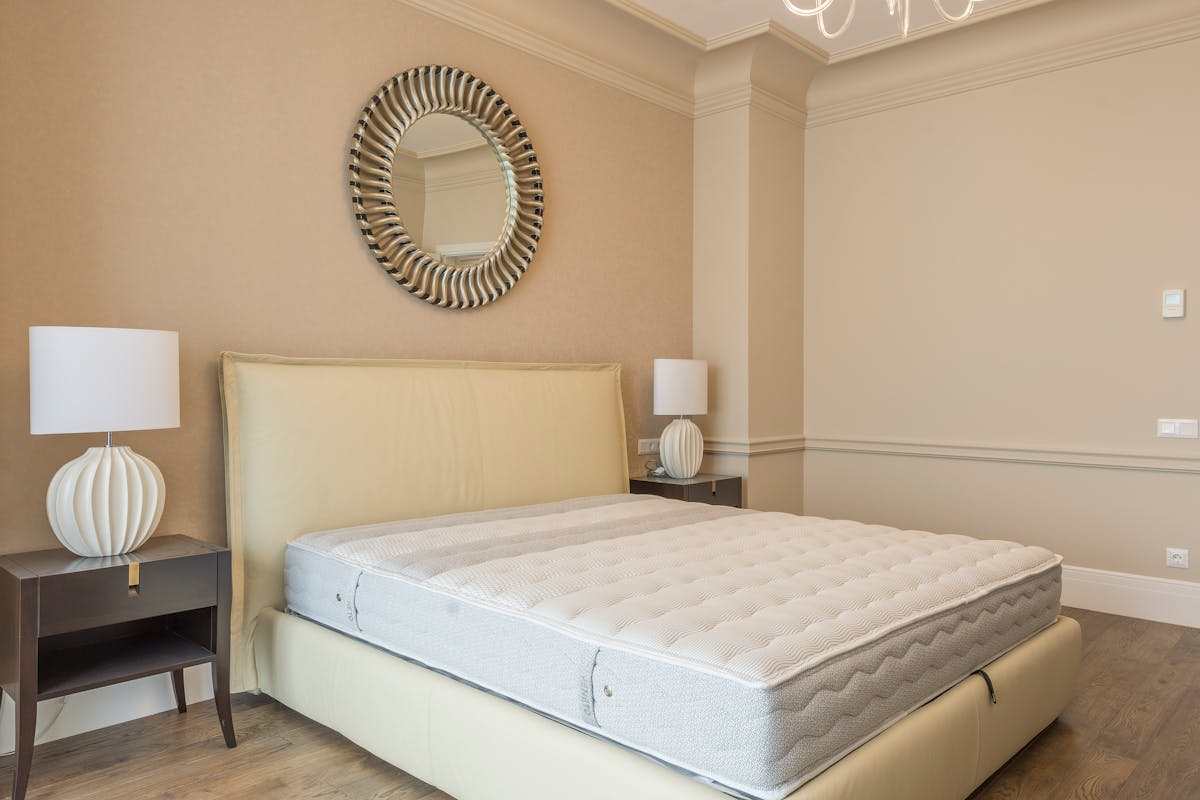
Bed bug control is among the most common pest issues we treat in Williamsburg. Rapid development and high tenant turnover make bed bug vigilance important in the area's rental buildings.
Bed bug control in Williamsburg: what to know
Williamsburg mixes converted industrial loft buildings, new-construction high-rises and older row houses — a varied building stock that produces everything from German cockroaches in dense apartments to rodents around the busy bar and restaurant scene.
The heavy nightlife and food-service density along Bedford Avenue and the waterfront drives strong rodent and fly pressure into nearby residential blocks.
Rapid development and high tenant turnover make bed bug vigilance important in the area's rental buildings.
How much does bed bug treatment cost in Williamsburg?
$300–$4,000
Per room (chemical): $300–$600. Per whole apartment (heat): $1,500–$4,000. National per-job average: $145–$500 (Bob Vila) to $1,000–$4,000 whole-home (aggregator synthesis).
| Chemical treatment | $300–$600 per room |
| Heat treatment | $1,500–$4,000 per apartment |
Market range — not our quote
This is a market range synthesised from published cost guides — not a quote from this provider. The actual price depends on an in-person or photo-based inspection.
The NYC per-room/heat figures come only from tier-2 NYC pest-industry blogs; the national anchor (Bob Vila $145–$500) is markedly lower, suggesting NYC-specific multi-visit chemical or heat jobs are being compared against a simpler national per-visit figure. Wide spread — verify against a real local quote before treating as a firm number.
What drives the price
- Chemical (multi-visit, cheaper per visit) vs heat (single visit, higher upfront)
- Apartment size / room count
- Severity and spread of infestation
- K9 inspection add-on for post-treatment clearance
Signs you need bed bug control
- Bite marks in a line or cluster, usually on skin exposed while sleeping
- Rust-coloured stains or dark spotting on mattress seams and box spring joints
- Pearl-white eggs or shed skins tucked in headboard cracks, outlet covers, or baseboard gaps
- Musty, sweetish odour in a bedroom with heavier activity
- New activity appearing on the shared-wall side of a room after a neighbouring unit or attached house treats — a sign bugs moved through the party wall rather than being reintroduced
How we treat bed bug control in Williamsburg
Park Slope is dominated by late 19th- to early 20th-century brownstone row houses — roughly 60–70% of the neighbourhood's residential stock — built as attached, 3–5 storey brick and brownstone structures with original timber floor joists and shared party walls. That construction is exactly what lets bed bugs move from one attached home to the next: a shared wall cavity or a floor joist bay doesn't stop at the property line the way a detached house's wall would.
Many of these row houses still have original or only partially renovated masonry, with mortar gaps, deteriorated sill plates, and utility penetrations that were never properly sealed. Those gaps are harbourage, not just entry points — bed bugs hide within about 5 feet of a host, and in an old brownstone that radius can reach into an adjoining unit's baseboard or outlet cover.
Local landmarks & coverage
We serve all of Williamsburg and the surrounding Brooklyn area — including Bedford Avenue, Williamsburg Bridge, Domino Park, McCarren Park — across ZIP codes 11211, 11206, 11249.