Bird control in Bedford-Stuyvesant: what to know
Bed-Stuy is one of the largest historic brownstone districts in the country — beautiful 19th-century row houses whose age brings deep baseboard gaps, shared walls and old plumbing that let rodents, roaches and ants move between homes.
Garden-level and basement units are especially prone to 'water bugs' from drains and to ant trails entering around old foundations and windows.
Busy commercial corridors along Fulton Street and high rental turnover keep both rodent pressure and bed bug vigilance high.
Signs you need bird control
- Accumulated droppings on ledges, sills, fire escapes, or under cornices
- Nesting material (twigs, debris) wedged into gutters or roofline gaps
- Persistent cooing or scratching from a fixed ledge or window unit
- Feathers collecting in a corner or stairwell landing
- Birds returning to the same perch daily despite being chased off
How we treat bird control in Bedford-Stuyvesant
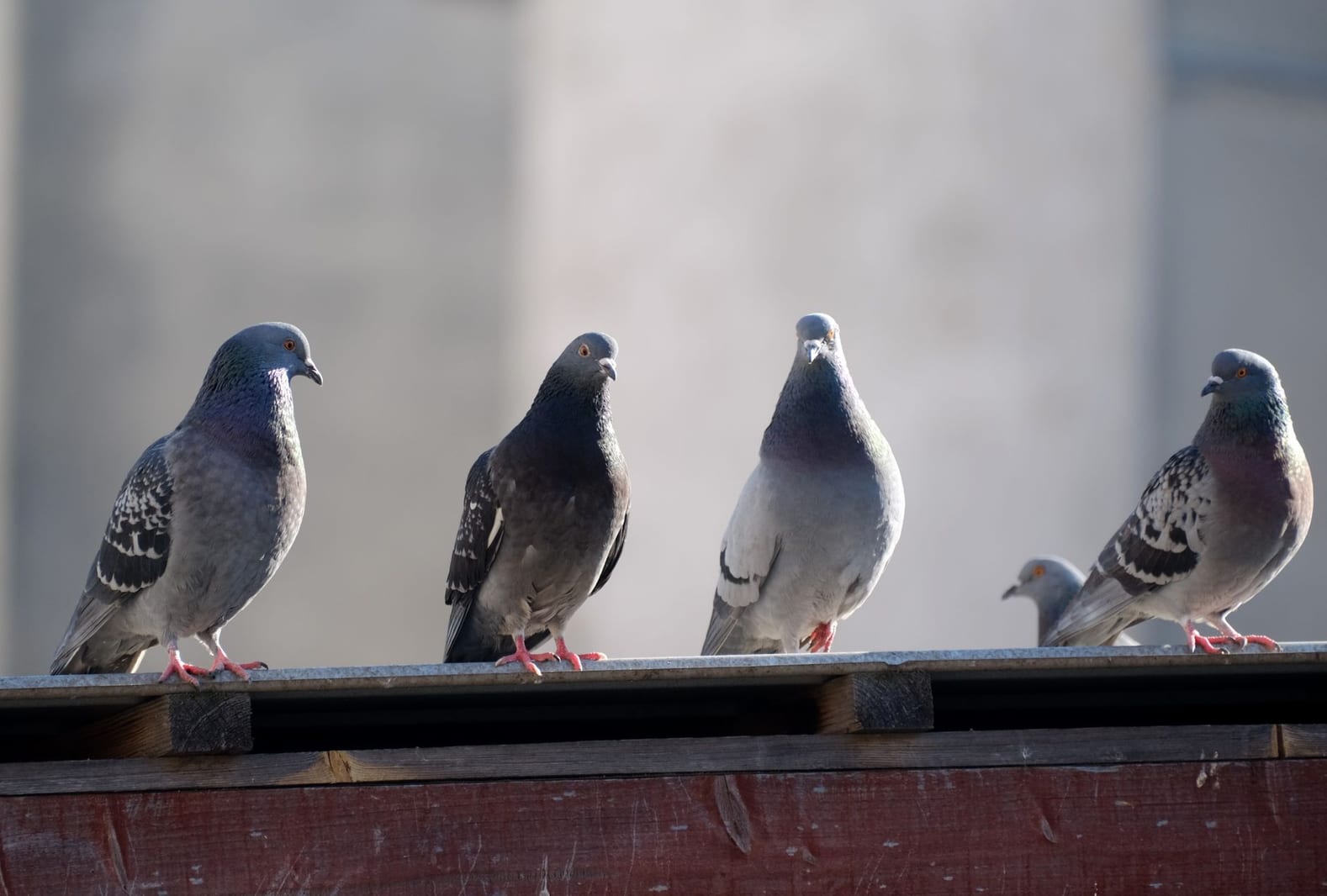
Almost every bird complaint we handle in Brooklyn brownstones and walk-ups comes down to pigeons — a non-native species with no federal protection, which is why they're the bird you're legally allowed to exclude outright. Droppings and nesting material build up fast on window ledges, AC units, and cornices, and once a ledge is established as a roost, the birds return to it daily.
Most other wild birds you'll see on a NYC property — sparrows, starlings excepted, along with native songbirds, hawks, and gulls — fall under the federal Migratory Bird Treaty Act, which restricts harming birds, eggs, or active nests. That changes the job from pest control to deterrence: we identify the species first, then choose netting, spike strips, or gel repellents that make the surface unworkable for roosting without touching the bird itself.
Local landmarks & coverage
We serve all of Bedford-Stuyvesant and the surrounding Brooklyn area — including Fulton Street, Stuyvesant Heights brownstones, Restoration Plaza — across ZIP codes 11216, 11221, 11233.