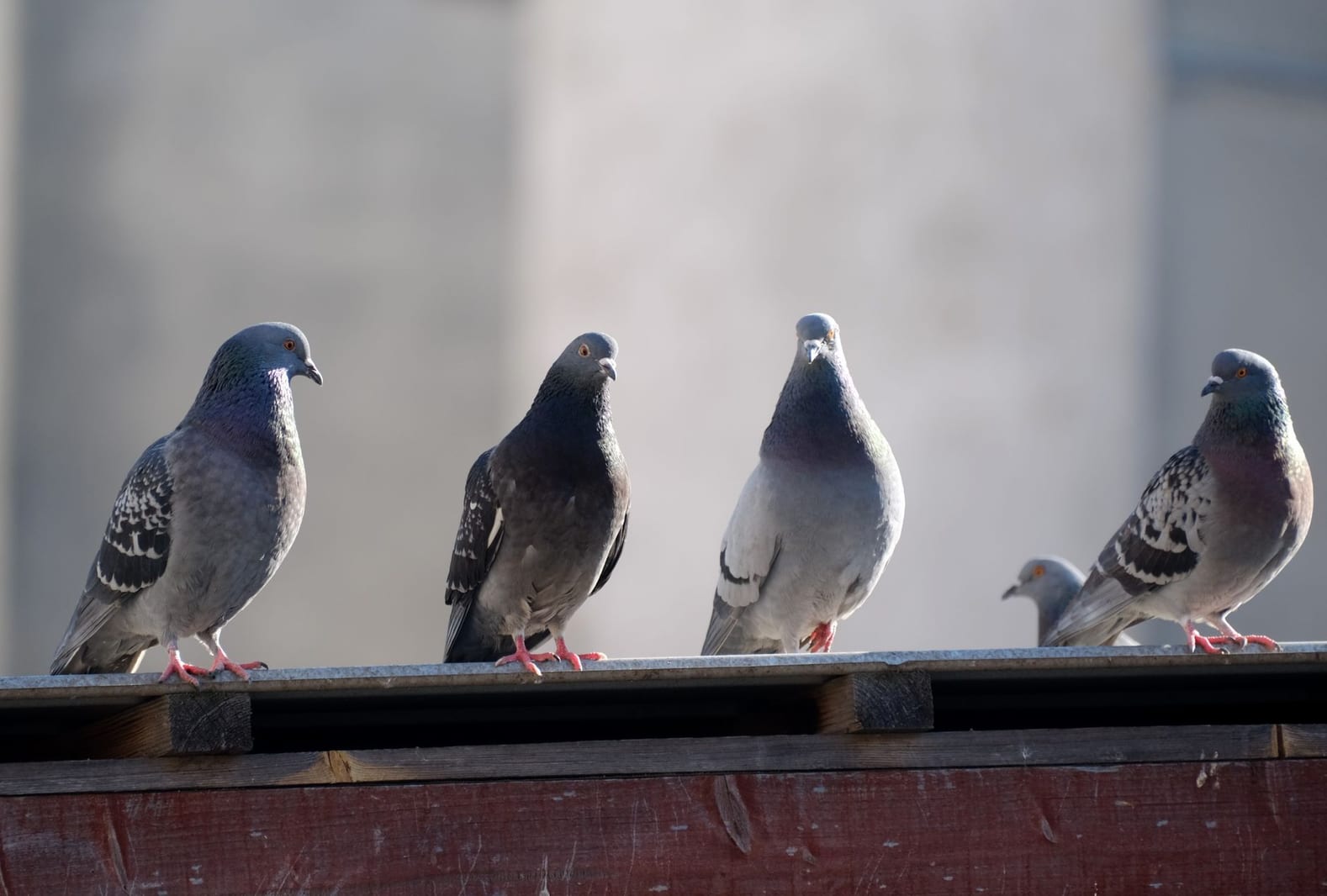
Almost every bird complaint we handle in Brooklyn brownstones and walk-ups comes down to pigeons — a non-native species with no federal protection, which is why they're the bird you're legally allowed to exclude outright. Droppings and nesting material build up fast on window ledges, AC units, and cornices, and once a ledge is established as a roost, the birds return to it daily.
Most other wild birds you'll see on a NYC property — sparrows, starlings excepted, along with native songbirds, hawks, and gulls — fall under the federal Migratory Bird Treaty Act, which restricts harming birds, eggs, or active nests. That changes the job from pest control to deterrence: we identify the species first, then choose netting, spike strips, or gel repellents that make the surface unworkable for roosting without touching the bird itself.
Under licence #15739, Mike Jacoby's technicians inspect the roost site, confirm species before recommending a method, and install exclusion hardware built for the surface — brick cornices take a different anchor than a sheet-metal window air conditioner sleeve.
Signs you have a bird control problem
- Accumulated droppings on ledges, sills, fire escapes, or under cornices
- Nesting material (twigs, debris) wedged into gutters or roofline gaps
- Persistent cooing or scratching from a fixed ledge or window unit
- Feathers collecting in a corner or stairwell landing
- Birds returning to the same perch daily despite being chased off
Why Park Slope sees this
Park Slope and Carroll Gardens brownstones see this constantly on cornices and bay-window ledges — the ornamental stonework that makes these blocks distinctive also gives pigeons a flat, sheltered perch right above a stoop or garden. Brooklyn Heights townhouses have the same issue on rooftop parapets and rear-facing ledges overlooking the promenade.
In Williamsburg and Flatbush, we see it just as often on fire escapes and low-slope roof edges above street level, where droppings become a liability issue for building owners as much as a nuisance. Every job runs under licence #15739, and because most native species are federally protected, the first call is always to identify the bird before deciding whether the fix is exclusion or something more limited.