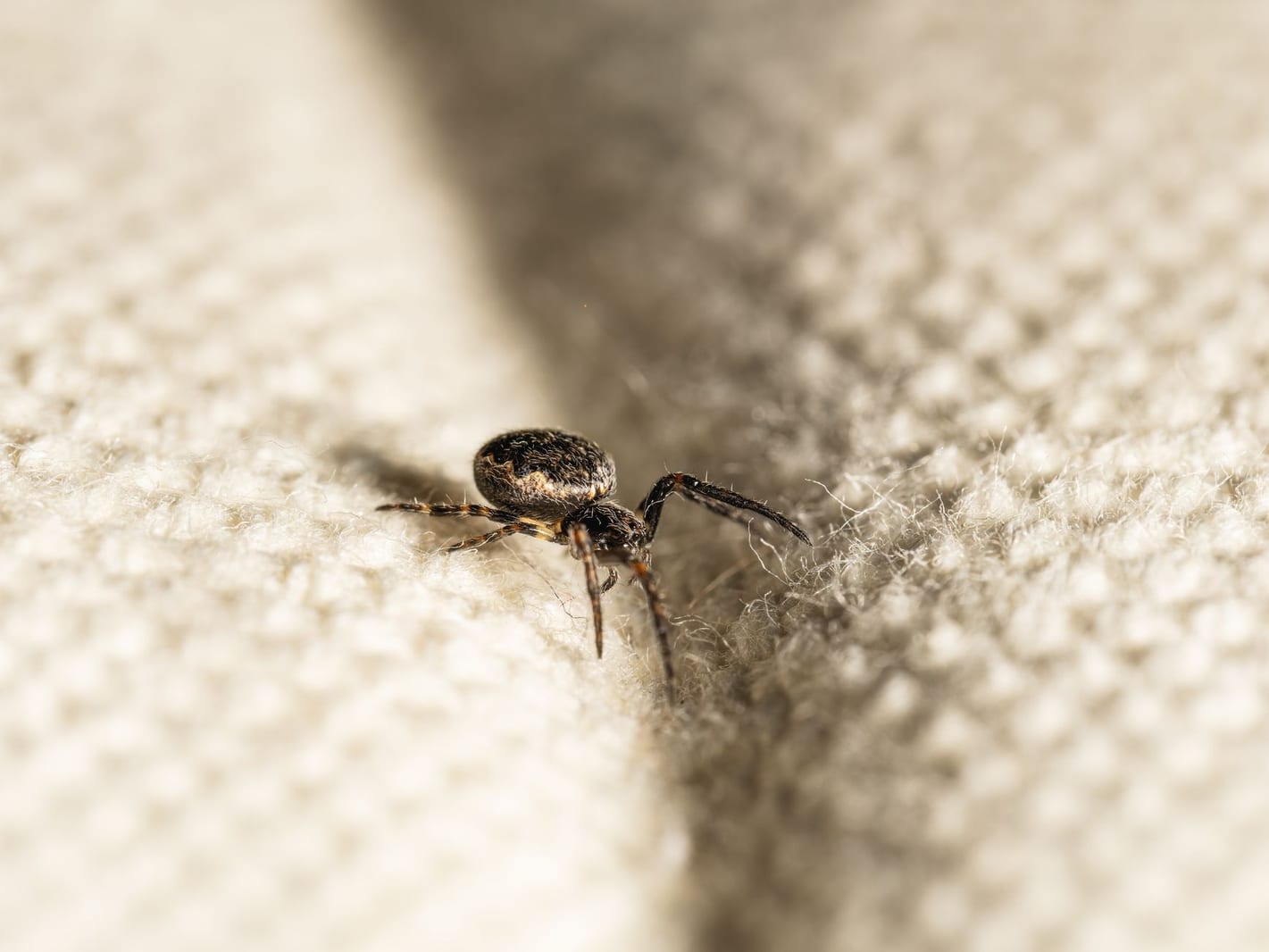
Spiders showing up in a Brooklyn basement, closet, or window corner are, in the overwhelming majority of cases, common house spiders or cellar spiders — both harmless to people and more a nuisance than a hazard. Spiders are predators, so their presence is usually a signal rather than the primary problem: they've moved in because there's a food source, typically other insects, or because a damp basement or crawlspace is giving them the moisture they need.
That's why our inspection looks past the spiders themselves to what's supporting them. If a basement has a moisture issue drawing in silverfish or other small insects, the spiders will keep returning even after a treatment, because the actual attractant is still there. Addressing the underlying insect activity or moisture is usually more effective long-term than repeated spider-only visits.
Mike Jacoby, the licensed exterminator behind Big Apple Pest Control, treats under NY Pesticide Business Licence #15739 and focuses on entry points, webbing concentration, and the conditions supporting spider activity — not just the visible spiders on a given day.
Are the spiders in my NYC home dangerous, and is spraying the answer?
The University of California IPM program's spider pest note states that spiders are mostly beneficial because they feed on pest insects, and the spiders commonly seen out in the open during the day are unlikely to bite people. For a New Yorker that means the everyday spiders you spot are working in your favour, eating other household pests rather than posing a threat. (UC Statewide IPM Program — Spiders)
The UC IPM spider pest note is explicit that insecticides will not provide long-term control and should not generally be used against spiders, recommending instead that you seal cracks and gaps, vacuum regularly, remove webs and screen well — because keeping out the insects spiders prey on discourages the spiders themselves. The durable fix is exclusion and prey reduction, not routine spraying. (UC Statewide IPM Program — Spiders)
Penn State Extension reports that brown recluse spiders are established in sixteen states across the South and Midwest — not one of them in the Northeast. In the New York region they appear only as rare accidental introductions transported in boxes from where they are native, not as an established population, so a true recluse in a NYC home is very unlikely. (Penn State Extension — Brown Recluse Spiders)
The CDC's NIOSH notes the venomous spiders found in the United States include the black widow and brown recluse, but that spiders are usually not aggressive and most bites happen only when one is trapped or touched. For homeowners that means medically significant bites are uncommon and largely preventable by not reaching blindly into undisturbed clutter, woodpiles or storage. (CDC / NIOSH — Venomous Spiders)
Exclusion and prey reduction vs routine spraying — what actually controls spiders
| Approach | What it involves | Effectiveness per UC IPM |
|---|---|---|
| Exclusion and sanitation | Seal cracks and gaps, screen well, vacuum spiders and egg sacs, remove webs and clutter | Recommended — addresses the cause and lasts |
| Reducing prey insects | Cut the indoor/outdoor insect population so spiders lose their food source | Recommended — discourages spiders by removing what they hunt |
| Routine insecticide spraying | Broadcast or perimeter pesticide application | Will not provide long-term control; not generally advised against spiders |
Signs you have a spider control problem
- Webbing concentrated in corners, basement joists, or window frames rather than scattered spiders
- Spider activity that increases in a specific room with visible moisture or dampness
- An uptick in other small insects (silverfish, moths, flies) alongside more spider sightings
- Egg sacs found in undisturbed areas like storage boxes, closets, or basement shelving
- Spiders reappearing in the same spot shortly after being cleared out
Why Park Slope sees this
Brownstone basements in Carroll Gardens and Park Slope are classic spider habitat — older foundations, some moisture, and plenty of undisturbed storage space give cellar spiders exactly the conditions they favor. In most of these cases the spiders themselves aren't the concern; it's whatever damp or insect issue in the basement is supporting them.
We get similar calls from older multi-family buildings in Brooklyn Heights and Harlem, where basement or ground-floor units often share the same moisture and insect-activity patterns. Treatment under NY Pesticide Business Licence #15739 focuses on that underlying cause rather than repeat visits chasing visible spiders.