Skip to content
Mon–Fri & Sun: 8am–6pm · Closed Saturday
ES
Big Apple Pest Control Licensed NYC Exterminators

Wasp, Hornet & Bee Removal in Queens Village

Looking for stinging insect removal in Queens Village? Big Apple Pest Control identifies the species before we treat — wasps and hornets nesting in eaves, sheds, and yard structures get removed because they're aggressive and will sting repeatedly to defend a nest, while honeybee swarms are handled with live relocation where feasible, since bees are beneficial and many licensed pest professionals treat them differently from wasps by policy. Queens Village in Queens has its own pest profile — queens Village is largely detached and semi-detached single-family homes with yards and gardens — a very different pest profile from Manhattan's apartments. Expect more ants, stinging insects, wildlife (squirrels, raccoons) and mosquito/tick pressure.

Get Your Free Quote

Or call now: (929) 706-1229

Licensed
& insured NY exterminators
4.6★
85 Google reviews
All 5 Boroughs
Neighbourhood-level NYC coverage
Guaranteed
We return until it's resolved

Stinging insect removal is among the most common pest issues we treat in Queens Village. Older homes with basements and crawl spaces are prone to rodents and to carpenter ants where there's moisture.

Stinging insect removal in Queens Village: what to know

Queens Village is largely detached and semi-detached single-family homes with yards and gardens — a very different pest profile from Manhattan's apartments. Expect more ants, stinging insects, wildlife (squirrels, raccoons) and mosquito/tick pressure.

Mature trees and proximity to Alley Pond Park add wildlife and seasonal outdoor-pest pressure, with animals seeking attic and soffit entry as weather cools.

Older homes with basements and crawl spaces are prone to rodents and to carpenter ants where there's moisture.

Signs you need stinging insect removal

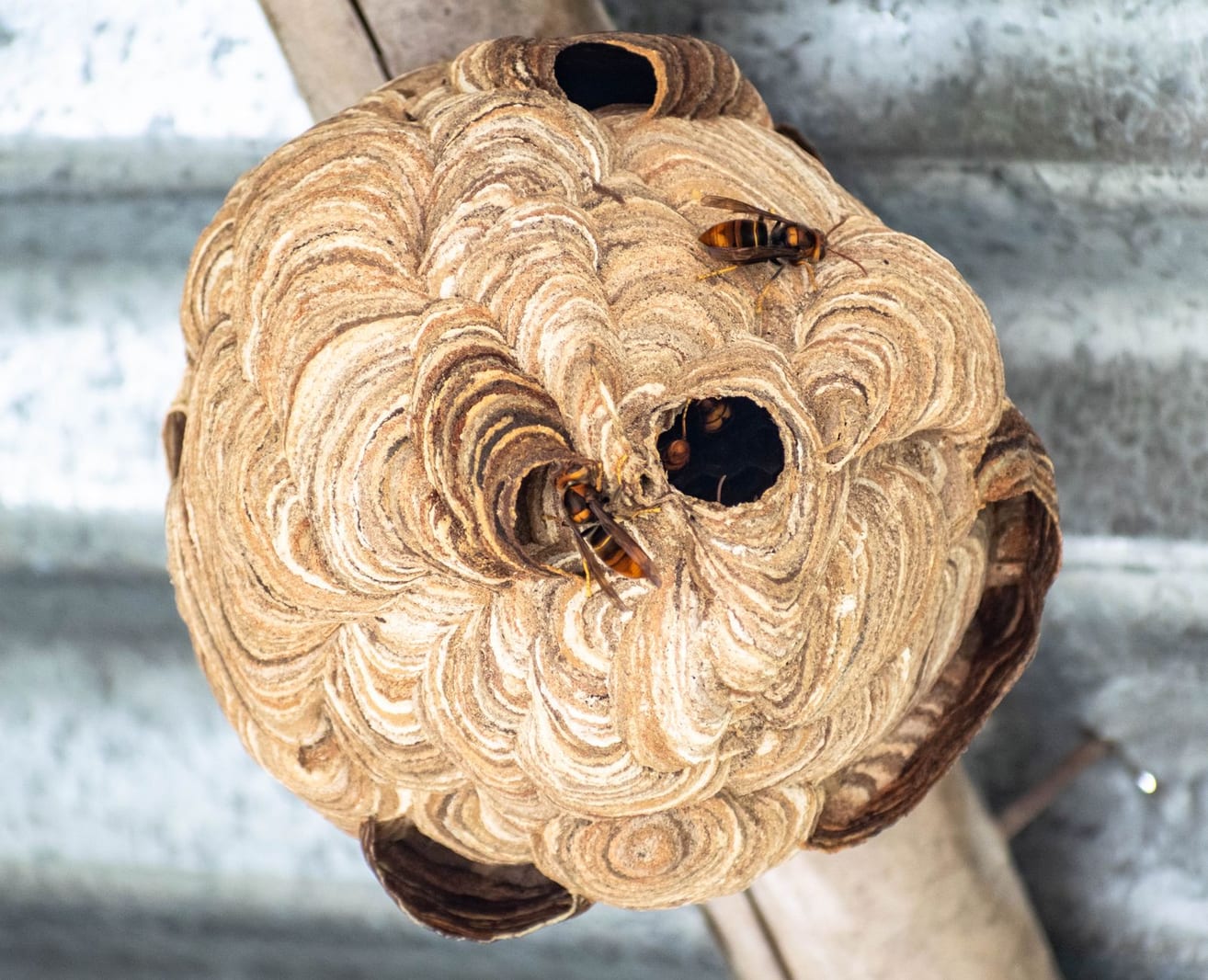
  • Visible paper nest under eaves, in a shed, or in a fence corner
  • Repeated wasp or hornet activity concentrated in one area of the yard
  • Ground-level holes with insects entering and exiting (possible yellowjacket nest)
  • A honeybee swarm clustered on a branch, wall, or structure
  • Increased stinging-insect activity near garbage areas or garden plantings in warmer months

How we treat stinging insect removal in Queens Village

Not every stinging insect on a Brooklyn property calls for the same response. Wasps and hornets build paper nests in eaves, gutters, shed corners, and yard structures, and they'll defend that nest aggressively — multiple stings from a single encounter are common, and for anyone with a known allergy, a nest close to a doorway or garden path is a real medical risk. Bees are a different case: honeybee colonies are ecologically beneficial, and where a swarm or hive can be safely relocated rather than exterminated, that's the preferred outcome for a licensed technician.

Our process starts with correct identification, because treatment for a ground-nesting yellowjacket colony is not the same as treatment for hornets under a roofline or a honeybee swarm that's settled in a tree. We inspect the nest location, assess access and proximity to where people actually walk, sit, or garden, and choose a method that matches the species and the site — not a one-size-fits-all spray.

Local landmarks & coverage

We serve all of Queens Village and the surrounding Queens area — including Jamaica Avenue, Cross Island Parkway, Alley Pond Park — across ZIP codes 11427, 11428, 11429.

Simple, transparent process

Our Queens Village Wasp, Hornet & Bee Removal Process

  1. 1

    Species identification

    We confirm whether you're dealing with wasps, hornets, yellowjackets, or honeybees before deciding on a method — the right response differs by species.

  2. 2

    Nest location and access assessment

    We locate the nest and evaluate how close it sits to doors, walkways, play areas, or garden beds to judge urgency and treatment approach.

  3. 3

    Treatment or relocation

    Aggressive nesting species are treated directly; honeybee swarms and colonies are relocated live where it's feasible to do so safely.

  4. 4

    Nest removal

    Once activity has stopped, the physical nest is removed to prevent scavenging insects and to stop any residual activity.

  5. 5

    Follow-up check

    We confirm the area is clear and flag any structural gaps (eave openings, shed cracks) that made the site attractive to nesting in the first place.

Wasp, Hornet & Bee Removal in Queens Village — FAQs

Do you provide stinging insect removal in Queens Village?

Yes — Big Apple Pest Control provides stinging insect removal throughout Queens Village (11427, 11428, 11429) and nearby Queens. Call us and we'll book the earliest available appointment.

Will you kill every bee you find?

No — honeybees are relocated live where it's feasible, since they're beneficial and a licensed technician's job is to solve the safety problem, not eliminate a species that isn't the threat. Aggressive nesting wasps, hornets, and yellowjackets are the ones that get treated directly.

How urgent is a nest near my back door?

Nest proximity to doorways, walkways, or play areas raises the priority significantly, especially for households with a known sting allergy. A nest that's rarely disturbed can sometimes wait a day or two for scheduling; one within a few feet of daily foot traffic should be treated as soon as possible.

Can I just spray the nest myself?

Store-bought sprays can trigger a defensive swarm response before they're effective, which is how most DIY stinging-insect encounters end up in a stinging incident. A licensed technician identifies the species and nest structure first, which determines both the method and how close it's safe to work.

Wasp, Hornet & Bee Removal in Queens Village — book today

Licensed, insured, local NYC exterminators. Call to schedule.

Call Now Free Quote