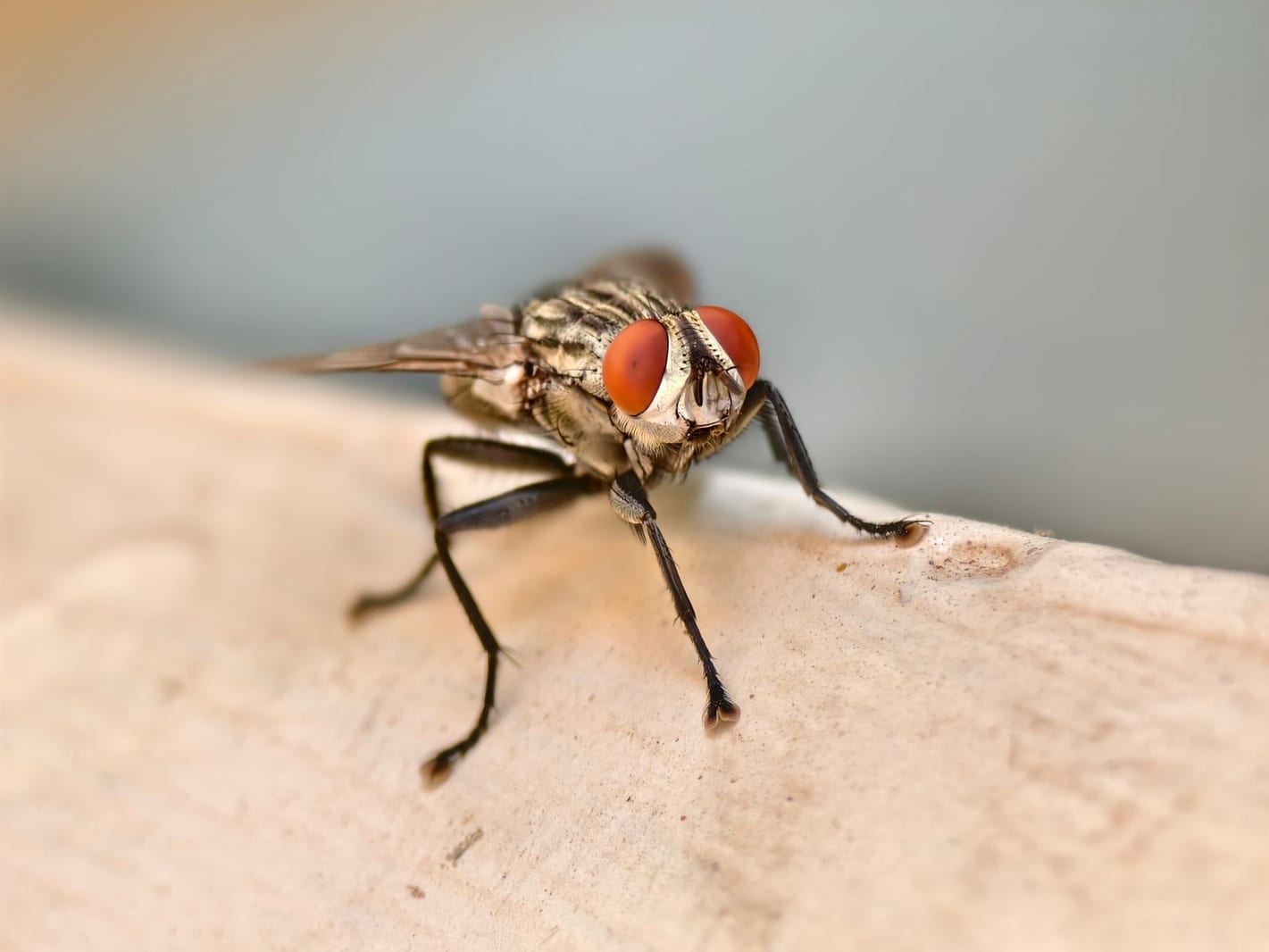
"Flies" covers more than one pest, and the fix depends entirely on which one you're dealing with. House flies breed in garbage, organic waste, and anywhere decaying matter sits too long — a restaurant's back area, an overflowing bin, a neglected compost bucket. Fruit flies are a different problem almost entirely: they breed in drains, disposals, and around ripening or rotting produce, and no amount of garbage cleanup fixes a drain-breeding population.
Because the two species need different source elimination, our inspection identifies the fly, traces it back to its breeding site, and treats that site directly rather than just spraying visible adults. In commercial kitchens and restaurant spaces this matters even more, since a small breeding site behind equipment or under a floor drain can sustain a population that outpaces any amount of visible-fly swatting.
Mike Jacoby, the licensed exterminator behind Big Apple Pest Control, treats under NY Pesticide Business Licence #15739 and applies commercial-grade sanitation and treatment protocols suited to both residential kitchens and food-service operations.
Getting rid of flies in a NYC kitchen or building — why sanitation beats spraying
House flies are mechanical disease vectors, not just a nuisance. Penn State Extension explains that flies regurgitate and excrete wherever they come to rest and thereby mechanically transmit disease organisms, carrying pathogens from garbage, drains and waste onto food and surfaces — the real public-health reason to keep fly numbers down in a dense NYC setting with shared bins and food premises nearby. (Penn State Extension — House Flies)
The genuine fix is sanitation, not spraying. Penn State Extension lists the control principles — sanitation, exclusion, non-chemical measures and chemical methods — in order of lasting effectiveness, sanitation first and chemicals last, and notes that flies cannot breed in large numbers if their food sources are limited. Eliminating the breeding material is what actually ends an infestation. (Penn State Extension — House Flies)
Spraying adult flies without removing the breeding source fails. Penn State Extension notes that because insecticides are broken down by sunlight the residual effect is greatly decreased, and interior space sprays give only temporary knockdown. Until the source — garbage, decaying organic matter, the greasy organic film inside drains — is removed, new adults keep emerging and the problem returns. (Penn State Extension — House Flies)
Finding the source is the first move, especially with drain (filter) flies. Penn State Extension calls finding and eliminating breeding places an important first step in control and warns against letting garbage, decaying organic matter and similar material accumulate. For small flies breeding in the organic slime inside floor drains, scrubbing out that film removes the larval habitat that fogging a room never reaches. (Penn State Extension — House Flies)
Signs you have a fly control problem
- Small flies clustering around a specific drain, disposal, or trash area rather than moving freely through the space
- Fly activity that spikes near ripening fruit, recycling bins, or a compost container
- Larvae visible in or around a garbage area, dumpster pad, or drain
- Persistent fly presence in a commercial kitchen despite regular visible cleaning
- Adult flies reappearing within days of being swatted or trapped, suggesting an active breeding site nearby
Why Park Slope sees this
Fly pressure in our service area tracks food density closely — restaurant corridors and mixed-use commercial blocks in Sunset Park and near Flushing's dense food-retail strip see more consistent fly calls than residential-only blocks, simply because there's more organic waste and produce turnover in a small footprint.
For residential clients in Park Slope and Carroll Gardens brownstones, the more common call is a sudden fruit fly bloom traced to a kitchen drain or a bag of produce left too long — not a garbage problem at all. We treat under NY Pesticide Business Licence #15739 and diagnose the actual species before recommending any fix.