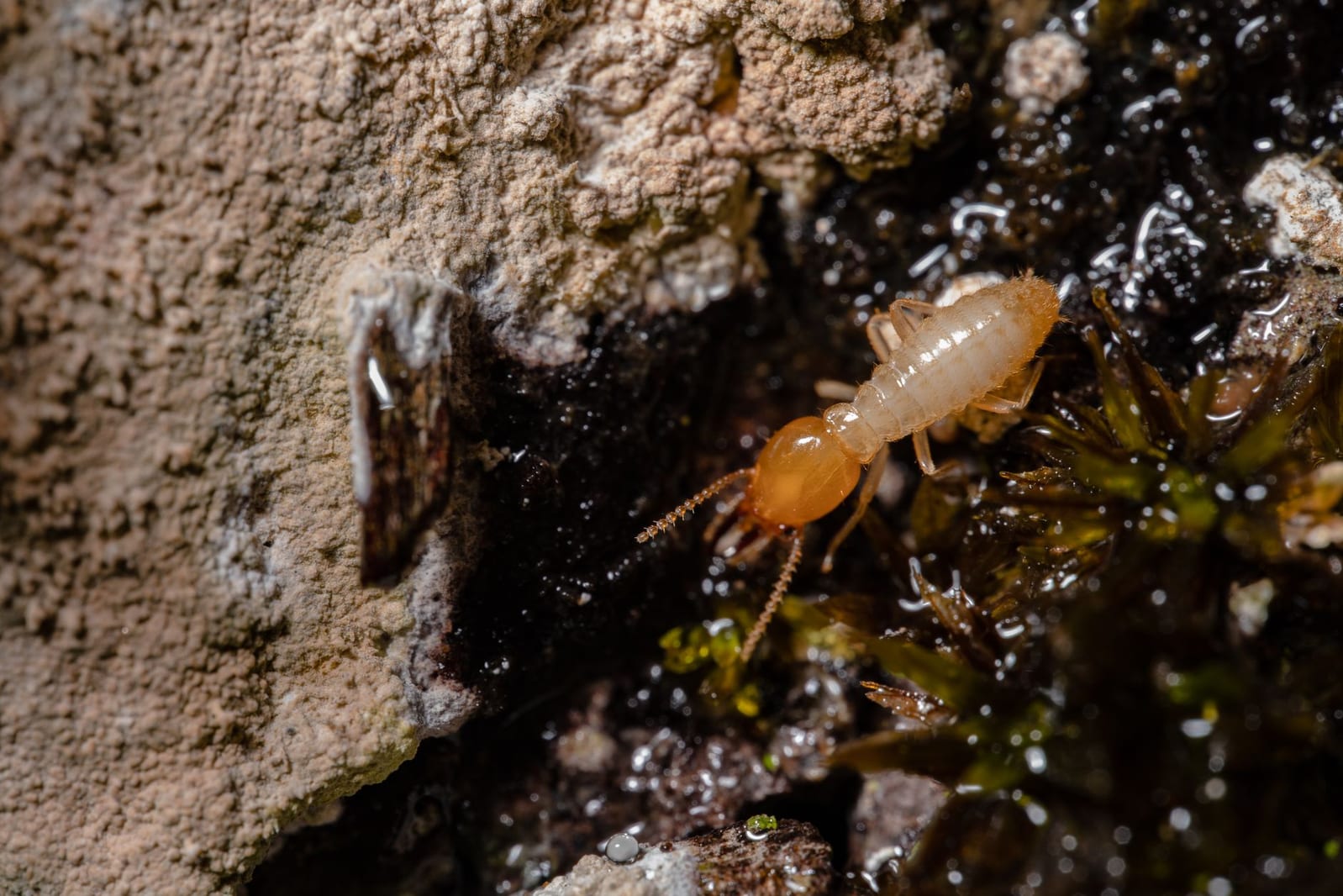
Termite control in Queens: what to know
Queens is the most varied borough by housing type, and its pest profile varies with it. The dense pre-war co-ops and garden-apartment buildings of Jackson Heights, Flushing and Forest Hills carry the shared walls, courtyards and ageing plumbing that let mice and German cockroaches move between units, while the borough's intense restaurant and market corridors — Roosevelt Avenue, Main Street in Flushing, Steinway Street in Astoria — drive some of the strongest rodent and roach pressure in the city.
Newer high-rise towers in Long Island City and older converted-industrial stock add elevator- and riser-borne rodent and cockroach pressure plus 'water bugs' from shared basements, and high tenant turnover across the rental stock keeps bed bugs a live concern in dense neighbourhoods like Jackson Heights and Jamaica.
Much of Queens, though, is detached and semi-detached single-family homes with yards — Bayside, Queens Village, Middle Village, Ozone Park — a profile heavier on ants, stinging insects, wildlife (squirrels, raccoons) and seasonal mosquitoes than apartment pests, with park edges like Alley Pond, Flushing Meadows–Corona and Juniper Valley adding warm-season outdoor pressure that pushes indoors as the weather cools.
How much does termite control & inspection cost in Queens?
$75–$8,000
Inspection: $75–$325 (avg ~$100; many companies offer inspections free). Standard treatment: $230–$1,000 (avg ~$600). Extensive infestation/fumigation: $1,500–$8,000. Annual termite bond/warranty: $200–$400/year.
| Inspection | $75–$325 one-time |
| Standard treatment | $230–$1,000 one-time |
| Extensive infestation / fumigation | $1,500–$8,000 one-time |
| Annual bond / warranty | $200–$400 per year |
US national figure — NYC typically runs higher.
Market range — not our quote
This is a market range synthesised from published cost guides — not a quote from this provider. The actual price depends on an in-person or photo-based inspection.
US national — NYC typically higher. No NYC-specific termite pricing found; NYC's older/pre-war building stock and closely-spaced structures are plausible cost drivers but this is inference, not a sourced NYC figure — not presented as verified.
What drives the price
- Inspection alone vs bundled with treatment quote
- Treatment method (spot/localized vs whole-structure fumigation)
- Severity/extent of colony
- Ongoing bond/warranty vs one-time treatment only
Signs you need termite control
- Winged swarmers near foundations or windows, especially in spring
- Discarded wings on windowsills or near foundation walls
- Mud tubes on foundation walls or in basements or crawlspaces
- Wood that sounds hollow when tapped, or shows soft or damaged texture
- Wood-to-ground contact points around the property (deck posts, wood siding touching soil)
How we treat termite control in Queens
Subterranean termites are a real and well-documented pressure in New York City's older wood-frame housing stock, and Brooklyn row houses with wood framing and basement or foundation-level wood contact are a common risk profile. These termites live in underground colonies and travel into structures through soil contact with foundations, wood-to-ground contact, or small cracks — damage often develops out of sight before it's visually obvious.
Spring is swarm season for subterranean termites in this region — a well-established seasonal pattern where winged reproductive termites emerge from an established colony to start new ones. Seeing a swarm of winged insects near your foundation, especially in spring, or discarded wings near windowsills, is one of the more reliable early indicators that a colony is active near the structure.
Local landmarks & coverage
We serve all of Queens and the surrounding Queens area — including Flushing Meadows–Corona Park, Citi Field, USTA Billie Jean King National Tennis Center, Rockaway Beach, Astoria Park, Queens Boulevard — across ZIP codes 11354, 11355, 11372, 11375, 11101, 11102, 11103, 11385, 11432, 11435.