Mosquitoes need standing water to breed, and in a dense borough like Brooklyn that water is rarely far away — a clogged gutter, a neglected birdbath, a tarp holding rainwater in a brownstone backyard, or a poorly draining catch basin can all sustain a breeding cycle through the warmer months. Treating the adult mosquitoes you can see is a temporary fix if the source keeps producing more, so our inspection starts by walking the property to identify every water source before any treatment goes down.
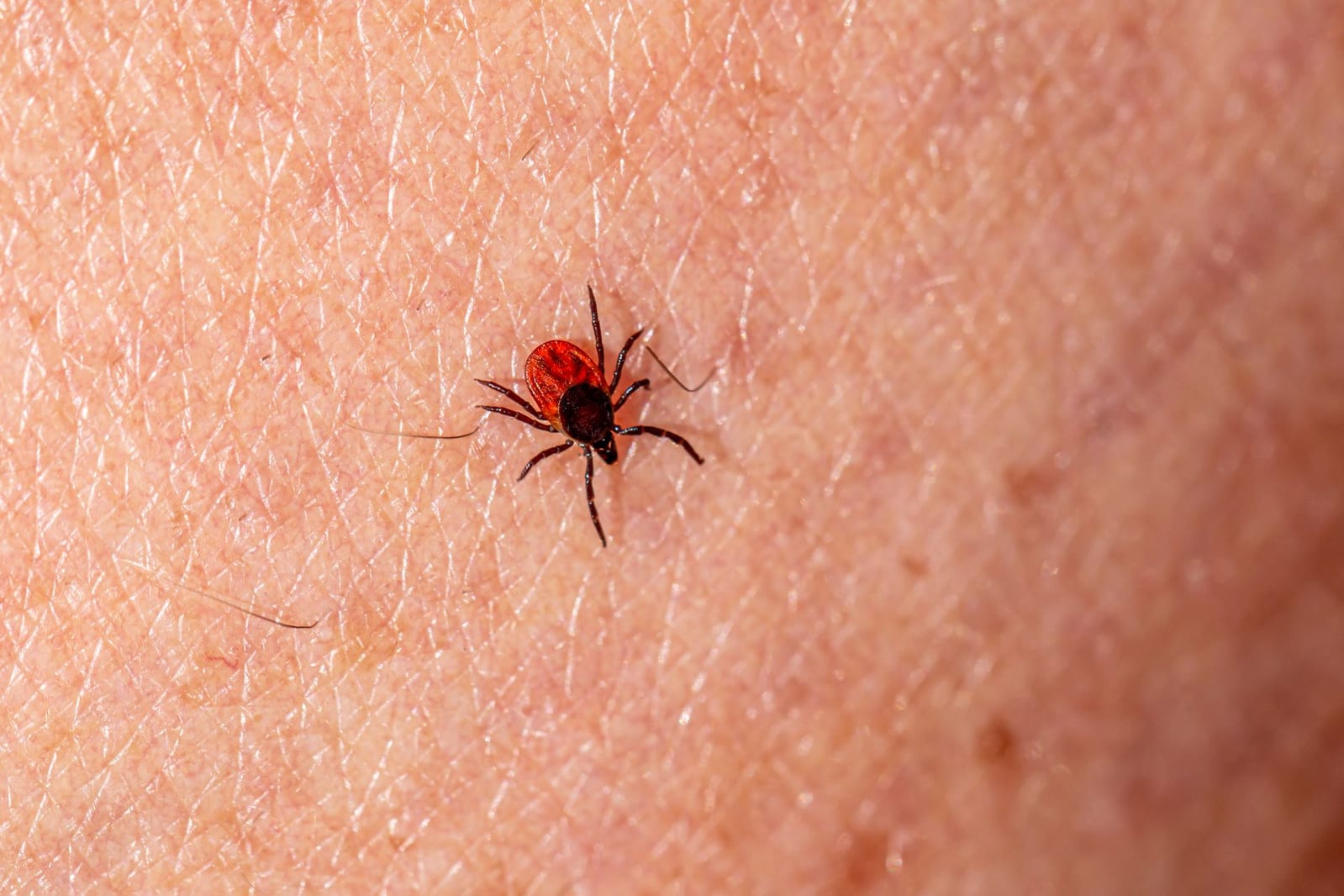
Ticks are a lower-frequency concern in most of our service area than mosquitoes, but they're a real one for properties backing onto parkland, overgrown lots, or green edges where deer, rodents, and tall grass overlap. We're straightforward about relative risk — a rowhouse block with no green space nearby has a very different tick profile than a property abutting Prospect Park — and we scope treatment accordingly rather than selling the same package to every address.
Mike Jacoby, the licensed exterminator behind Big Apple Pest Control, applies EPA-registered barrier treatments to vegetation, mulch beds, and other resting and breeding areas, timed to the mosquito and tick season rather than run on a generic calendar.
Do I really need professional mosquito and tick control in New York City?
The CDC reports that West Nile virus is the leading cause of mosquito-borne disease in the contiguous United States, spreading to people through the bite of a mosquito that has fed on infected birds. Most people infected develop no symptoms, but a small share go on to serious illness affecting the nervous system — which is why summer mosquito reduction matters for New York households. (CDC — About West Nile Virus)
The CDC advises that the foundation of mosquito control is removing standing water: once a week, empty and scrub, turn over, cover or throw out any item that holds water — buckets, planters, toys, birdbaths, flowerpot saucers or trash containers — because mosquitoes lay eggs near water. In a NYC backyard or courtyard the real breeding sites are clogged drains, saucers and forgotten containers. (CDC — Mosquito Control at Home)
The EPA explains that eliminating standing water in rain gutters, old tyres, buckets and other containers is the first and most cost-effective step in mosquito control, noting that egg- and larva-stage interventions are generally the most effective, least costly way to control mosquitoes — so removing breeding sites should always come before spraying adults around a property. (EPA — Success in Mosquito Control: An Integrated Approach)
For ticks, the CDC notes the bacteria that cause Lyme disease spread through the bites of infected blacklegged (deer) ticks, which live in grassy, brushy or wooded areas, and that most cases occur in the Northeast — the region New York sits in. It recommends EPA-registered repellents with DEET, picaridin, IR3535 or oil of lemon eucalyptus, clothing pre-treated with 0.5% permethrin, and prompt tick removal. (CDC — Preventing Lyme Disease)
Why source reduction comes before spraying
| Approach | What it targets | What the agencies say |
|---|---|---|
| Source reduction (eliminate standing water) | Eggs and larvae — stops mosquitoes before they hatch | EPA: egg/larva interventions are the most effective, least costly control, and the first tactic |
| Larvicide treatment | Larvae in water that cannot be drained | EPA: larvicide treatment of breeding habitats reduces nearby adult numbers |
| Adult spraying (adulticide) | Flying adults already present | EPA lists adult control last — after habitat removal, barriers and larval control |
How much does mosquito & tick control cost in NYC?
$50–$2,500
Per-visit: $80–$150. Per-season average: $350–$1,000 (property-dependent; quarter/half-acre seasonal average ~$500). Overall reported range: $50–$2,500. Larvicide-only visits: $80–$120.
| Per-visit | $80–$150 per visit |
| Per-season | $350–$1,000 per season |
US national figure — NYC typically runs higher.
Market range — not our quote
This is a market range synthesised from published cost guides — not a quote from this provider. The actual price depends on an in-person or photo-based inspection.
US national, yard/property-based figures — most NYC pest-control demand is apartment/building interior, so these outdoor-yard-oriented ranges apply best to NYC rowhouse/backyard or small-business-patio contexts, not typical apartment units. No NYC-specific mosquito guide found.
What drives the price
- Property/yard size
- Treatment method (adult spray vs larvicide briquettes vs misting system)
- Single visit vs full-season recurring plan (every ~21 days, April–September)
- Contract length
Signs you have a mosquito & tick control problem
- Standing water anywhere on the property — clogged gutters, saucers under potted plants, tarps, unused kiddie pools
- Mosquito bites concentrated in the early morning or evening, especially in a backyard or near a stoop
- Visible larvae ('wrigglers') in any water that's sat undisturbed for more than a few days
- Overgrown grass, brush, or leaf litter along a fence line or adjacent to green space
- A pet or family member finding an attached tick after time in a park-adjacent yard
Why Park Slope sees this
Brownstone Brooklyn creates its own mosquito microclimate: small backyards packed close together, shared fence lines, and a lot of container gardening mean one neglected water source on one property can supply mosquitoes to several neighbors. We see this pattern often in Park Slope, Carroll Gardens, and Brooklyn Heights, where backyard density is high and drainage is inconsistent block to block.
Tick exposure in our service area tracks green space more than borough lines — properties near Prospect Park's edges, or with overgrown side yards, carry more tick pressure than a mid-block rowhouse with a paved yard. We treat under NY Pesticide Business Licence #15739 and scope every visit to the actual habitat on the property, not a blanket assumption.