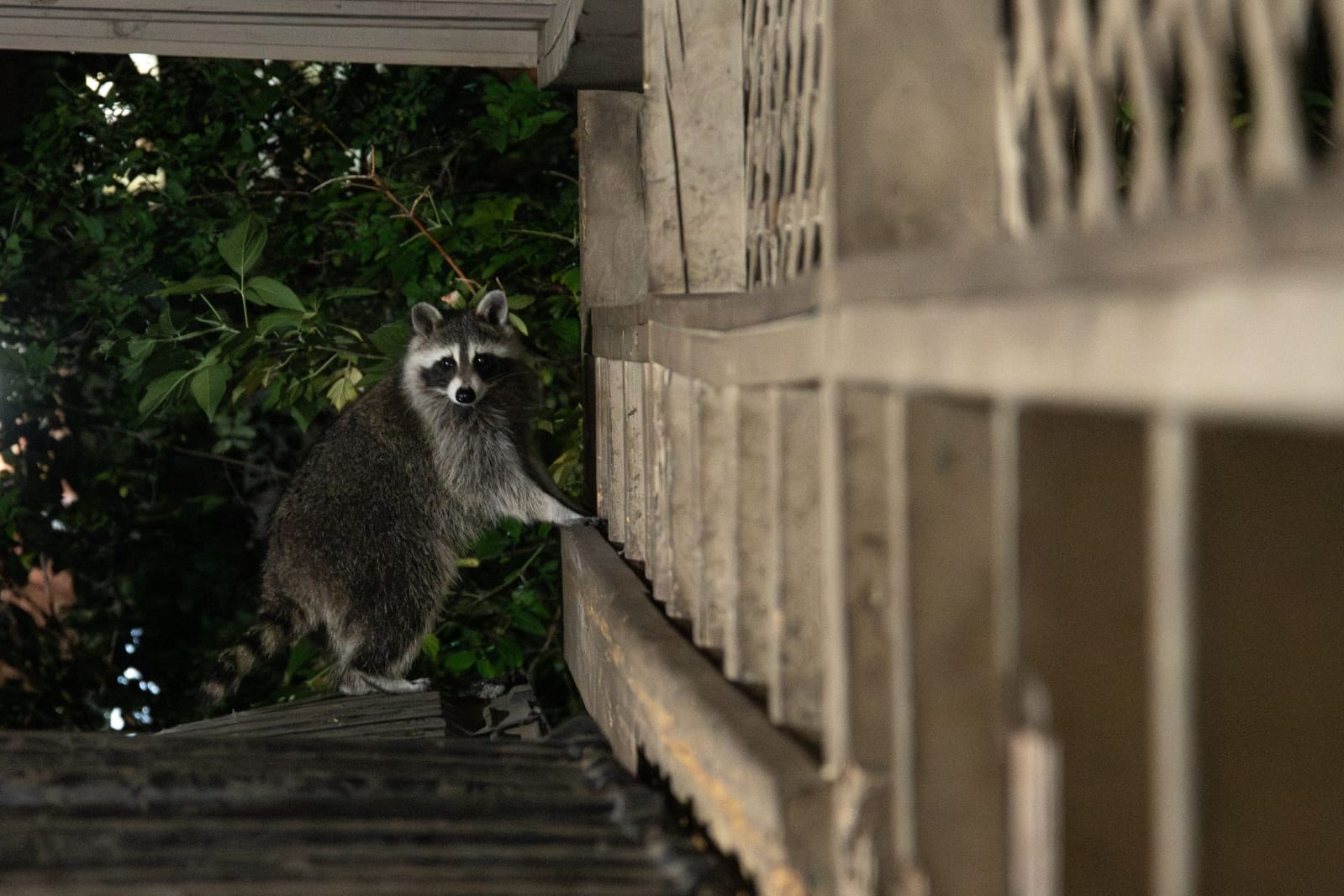
Wildlife removal in Upper East Side: what to know
The Upper East Side mixes luxury pre-war co-ops with high-rises and townhouses. Even well-kept buildings face bed bug risk from travel-heavy residents and clothing-moth pressure from stored natural fibres and wool.
Shared trash and service areas in large buildings sustain rodent and cockroach pressure regardless of the building's grade.
Discretion matters here — we service co-ops and high-end buildings quietly and provide the documentation boards require.
How much does wildlife & squirrel removal cost in Upper East Side?
$150–$600
Squirrel removal: $200–$600 (typical $250–$450, avg ~$300). Raccoon removal: $300–$450 avg, or $150–$300 per animal for trap-and-release. Exclusion vent installation: $300–$450 each. One-way mesh exclusion barrier: $10–$25/linear foot.
| Squirrel removal | $200–$600 one-time |
| Raccoon removal | $150–$450 one-time |
| Exclusion vent installation | $300–$450 per vent |
US national figure — NYC typically runs higher.
NYC pest-control pricing tends to run higher in Manhattan than in Brooklyn or Queens — tier-2 NYC industry sources cite roughly a 10–20% premium, attributed to building-access logistics (walk-ups, elevators, doorman/board approval) and labour costs. This is directional signal from industry blogs, not an independently verified figure — confirm with a quote for your specific building.
Market range — not our quote
This is a market range synthesised from published cost guides — not a quote from this provider. The actual price depends on an in-person or photo-based inspection.
US national — NYC typically higher. No NYC-specific wildlife-removal cost guide found despite NYC's well-documented raccoon/squirrel-in-building problem — a genuine gap versus the bed bug/rat/roach guides.
What drives the price
- Species
- Number of animals
- Location (open yard vs attic/wall void)
- Cleanup/repair needed after removal (droppings, insulation, entry-point damage)
Signs you need wildlife removal
- Scratching or thumping in the attic, wall cavity, or chimney, usually at dusk or dawn
- Torn or pushed-out soffit vents, roof flashing, or chimney caps
- Raccoon droppings (dark, tubular) in a yard, deck, or attic corner
- A knocked-over trash can or dug-up garden bed on a recurring basis
- Visible den entry — a gap under a shed, deck, or loose siding
How we treat wildlife removal in Upper East Side
Raccoons and squirrels denning in a NYC building are a licensing issue as much as a pest issue — New York State regulates who can legally trap and handle nuisance wildlife, and a homeowner pulling an animal out of a chimney or soffit themselves risks both a bite and a botched job that leaves the entry point open. Squirrels favor attic gaps and roof eaves; raccoons go for chimneys, crawlspaces, and sheds, especially where a yard backs onto another yard or a park.
The tell in most cases isn't the animal itself but the noise and damage pattern — scratching in a wall cavity at dusk, torn soffit vents, or a chimney cap knocked loose. Female raccoons in particular will den in a chimney to raise young, which changes the approach: exclusion has to wait until the young are mobile enough to leave with the mother rather than trapping her away from a dependent litter.
Local landmarks & coverage
We serve all of Upper East Side and the surrounding Manhattan area — including Museum Mile, Central Park, Lenox Hill, Yorkville, Park Avenue — across ZIP codes 10021, 10028, 10065, 10075, 10128.